Alan Dawson Uncrowned Wed, October 14, 2026 at 6:44 PM UTC · 7 min read About Our Ads Advertisement Advertisement Advertisement On Monday night, residents in Riyadh, Saudi Arabia heard their cell phones ping as official text messages warned of an imminent aerial attack.
It was the third successive day Ansar Allah, the militant organization also known as the Houthis, launched missile attacks targeting the Saudi Arabian capital.
Described by the United States government as a foreign terrorist organization, the Houthis are an Iran-backed political and paramilitary movement from northern Yemen.
The organization said its intention was to strike King Khalid International — an airport that has remained closed since attacks on Oct. 10 and Oct. 11 killed at least 13 people, wounding more than 300.
The airport has been on fire. There has been significant interior damage. At least one commercial aircraft is ruined.
The strikes follow months of escalating hostilities between the Houthis and Saudi-backed Yemeni forces, which bombed Sanaa International Airport on July 13 to prevent an Iranian aircraft carrying a Houthi delegation from landing.
Airports throughout Saudi Arabia are "legitimate targets" for continued drone strikes and ballistic missiles, Mohammed al-Bukhaiti, a member of the Houthis's political bureau, recently said.
The attacks have placed considerable pressure on Saudi Crown Prince Mohammed bin Salman's economic diversification ambitions. Tourism and sport are pivotal to the country's Vision 2030 program, but Riyadh's principal international airport remains closed, with no confirmed reopening date.
The conflict has already disrupted one of the energy sector's biggest events of the year, with big oil companies modifying their travel plans and event commitments.
BP failed to attend the ongoing WPC Energy Congress in Riyadh, citing "travel disruption" to Reuters . Chief executives from ExxonMobil, Shell, and Chevron were also expected to attend but were absent from Monday's agenda.
The Six Kings Slam tennis tournament, scheduled to take place from Oct. 21–24 as part of Riyadh Season, was pushed Wednesday to take place instead Dec. 27–30. An official statement said the postponement was to do with "logistical reasons."
Only 20 miles from King Khalid International is the Kingdom Arena which, on Oct. 31, is scheduled to host a WBC super middleweight world title fight.
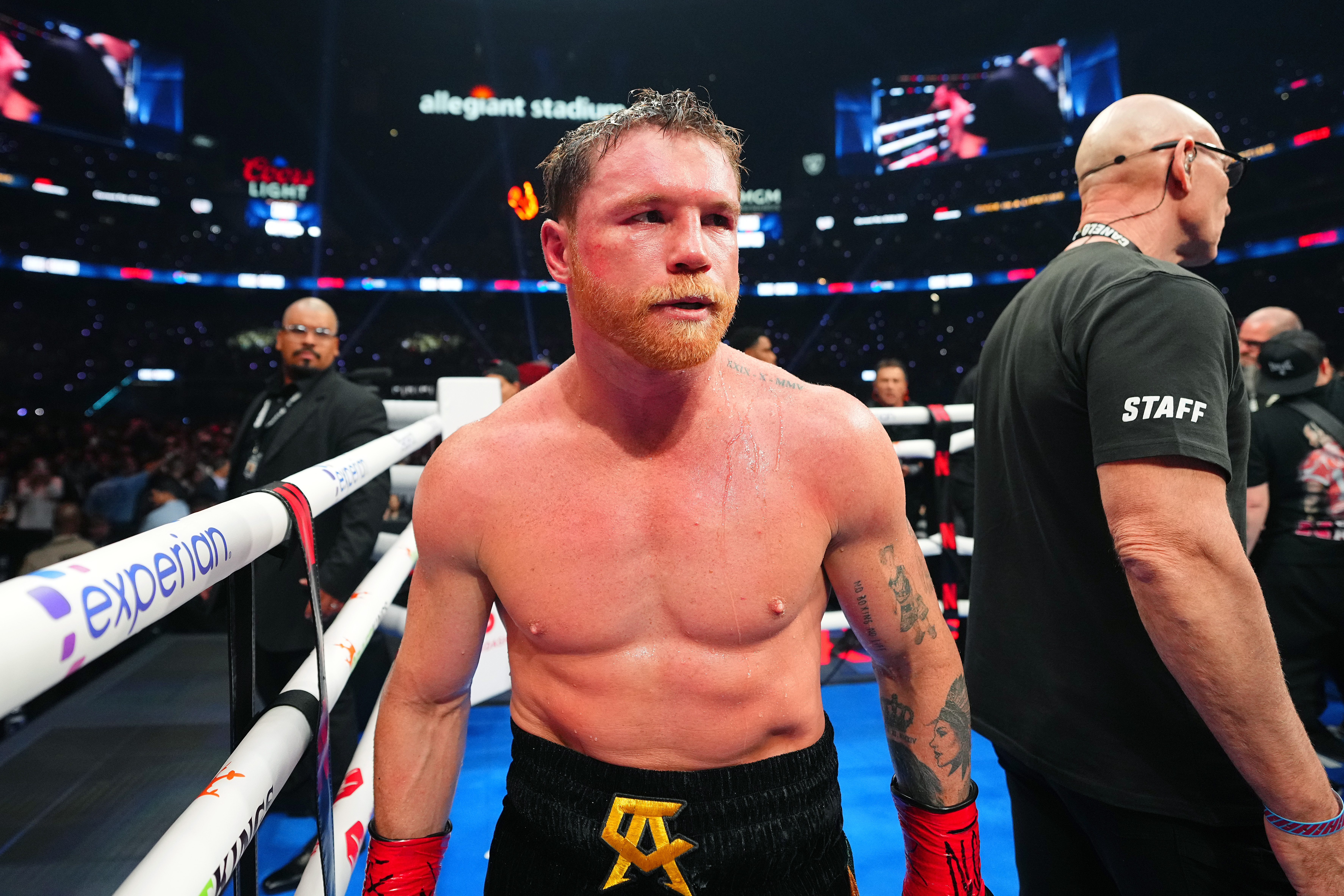
The champion, Christian Mbilli, puts his belt on the line against one of the sport's biggest names and most decorated boxers, Saul "Canelo" Alvarez.
It is Alvarez's first fight since his September 2025 loss by unanimous decision to Terence "Bud" Crawford , against whom he lost his undisputed championship world titles. Against Mbilli, "Canelo" has the chance to win the WBC belt back. An approximate $50 million purse could be his, win or lose.
It is his second fight in the country and one of the year's biggest bouts.
According to one of the principal organizers of the event, Turki Alalshikh, Alvarez "fears nothing" and is said to have reached out to Alalshikh personally to tell him "he'll still fight in Riyadh" on Oct. 31. "Canelo" has yet to speak for himself on the matter.
That determination stands in contrast to safety warnings issued by the U.S. government.
The U.S. Department of State said that, as of Oct. 12, people should "reconsider travel" to places like Riyadh because of the "risk of drone and missile targeting [by] Iranian-supported Houthis."
It went on to say there is a risk of terrorist violence, and that attacks can occur with little to no warning. Targets can even include tourist locations and large gatherings, hotels and locations where U.S. citizens gather, entertainment venues included.
On Oct. 13, the general directorate of Saudi civil defense issued a warning to Riyadh's own residents . Among the instructions was an explicit message to "avoid crowds."
The Kingdom Arena, where "Canelo" and Mbilli are set to fight later this month, seats up to 30,000 spectators.
But with the airport closed, how are "Canelo," Mbilli, their respective teams, fight night officials, and broadcasters supposed to even reach Riyadh?
Once there, what measures are in place to protect them if the Houthis continue their latest offensives?
Combat sports analyst Luke Thomas recently said "trying to force this fight to happen in a f****** war zone" shows the extent of how "broken the sport of boxing is".
Uncrowned contributor John S. Nash on Oct. 11 said Saudi Arabia "is perhaps obsessed with presenting an image of stability" and would rather see this as "a minor hiccup; please keep investing into Saudi Arabia." Nash later added Saudi Arabia might not want to renege on the fight contract because they'd likely be "on the hook for the cost of the event," with "Canelo" possibly "playing a game of chicken" with the state.
Most Valuable Promotions co-founder and CEO, Nakisa Bidarian, shared a similar theory the following day.
"Canelo is due a lot of money," he said. "If he pulls out, he is no longer due that money. If the event is cancelled, he is probably also due that money. Tough situation."
If Alalshikh and other event organizers are engaging in brinkmanship over a $50 million fight, they could keep the date but move the event to Guadalajara, Texas, or Nevada — markets where "Canelo" still sells tickets.
Musical artist Doja Cat has booked the T-Mobile Arena in Las Vegas on Oct. 31, but boxing's capital has other venues. MGM Grand Garden Arena and Thomas & Mack Center have concerts the day before but are vacant on fight night, for example.
And though difficult to de-rig a music event, erect a ring, and make it appropriate for an international broadcast production, it is not implausible to turn it around in a 12-hour timeframe. You need only look to Alvarez's own fight history for proof.
Back when "Canelo" fought Jaime Munguia in May 2024, Kwokman Productions documented a 13-hour turnaround to get the T-Mobile Arena boxing-ready following an NHL playoff game the previous evening. Production crews loaded in at 1 a.m. on fight day and successfully prepared the venue for broadcast.
Combat sports is also an industry no stranger to emergency event relocation at the last minute.
Canelo Alvarez is still scheduled to fight Oct. 31 in Saudi Arabia, despite ongoing attacks in the region.
In 2018, the UFC relocated its UFC 232 pay-per-view from Las Vegas to Inglewood, California on just six days' notice after headliner Jon Jones returned an abnormal drug-test result ahead of his title defense against Alexander Gustafsson.
Nevada's athletic commission wanted more time to investigate before licensing Jones after a trace amount of Turinabol was detected — a substance he had previously tested positive for prior to a suspension in 2017. California accepted the fight, so the UFC relocated fighters, officials, a production crew, and the pay-per-view operation across state lines during Christmas week.
What remains unclear is whether Saudi Arabia would consider relocating the fight as a practical solution, or an admission it cannot safely host one of boxing's grandest spectacles.
For now, the fight remains scheduled for Riyadh despite the missile attacks, travel warnings, and growing concerns over the safety of all involved.
Source: Sport


0 Comments