Trump says oil companies could be 'reimbursed' for Venezuela spending

President Donald Trumpsaid in a new interview that the U.S. could help finance improvements to Venezuela's oil infrastructure,telling NBCthat oil companies could be "reimbursed" for their investments.

The president also said in the Jan. 5 interview that the U.S. is not at war with Venezuela and there won't be a quick election. And he dismissedreporting in the Washington Postthat the reason he declined to back opposition leader María Corina Machado to take over the country is that she won the Nobel Peace Prize, which he has sought.

"She should not have won it," Trump said of Machado. "But no, that has nothing to do with my decision."

A still image from video posted by the White House's Rapid Response 47 account on X.com, which originated from the @PaulDMauro account, shows Venezuela's President Nicolas Maduro being walked in custody down a hallway at the offices of the U.S. Drug Enforcement Administration (DEA) in New York City on Jan. 3, 2026. <p style=Venezuelan leader Nicolás Maduro, pictured here after his capture aboard the USS Iwo Jima, is seen in this handout image posted by U.S. President Donald Trump on Truth Social Jan. 3, 2026. The United States captured Venezuelan leader Nicolás Maduro and his wife in an overnight military operation on Jan. 3, 2026, President Donald Trump said, as explosions rocked Caracas and targets across the country.

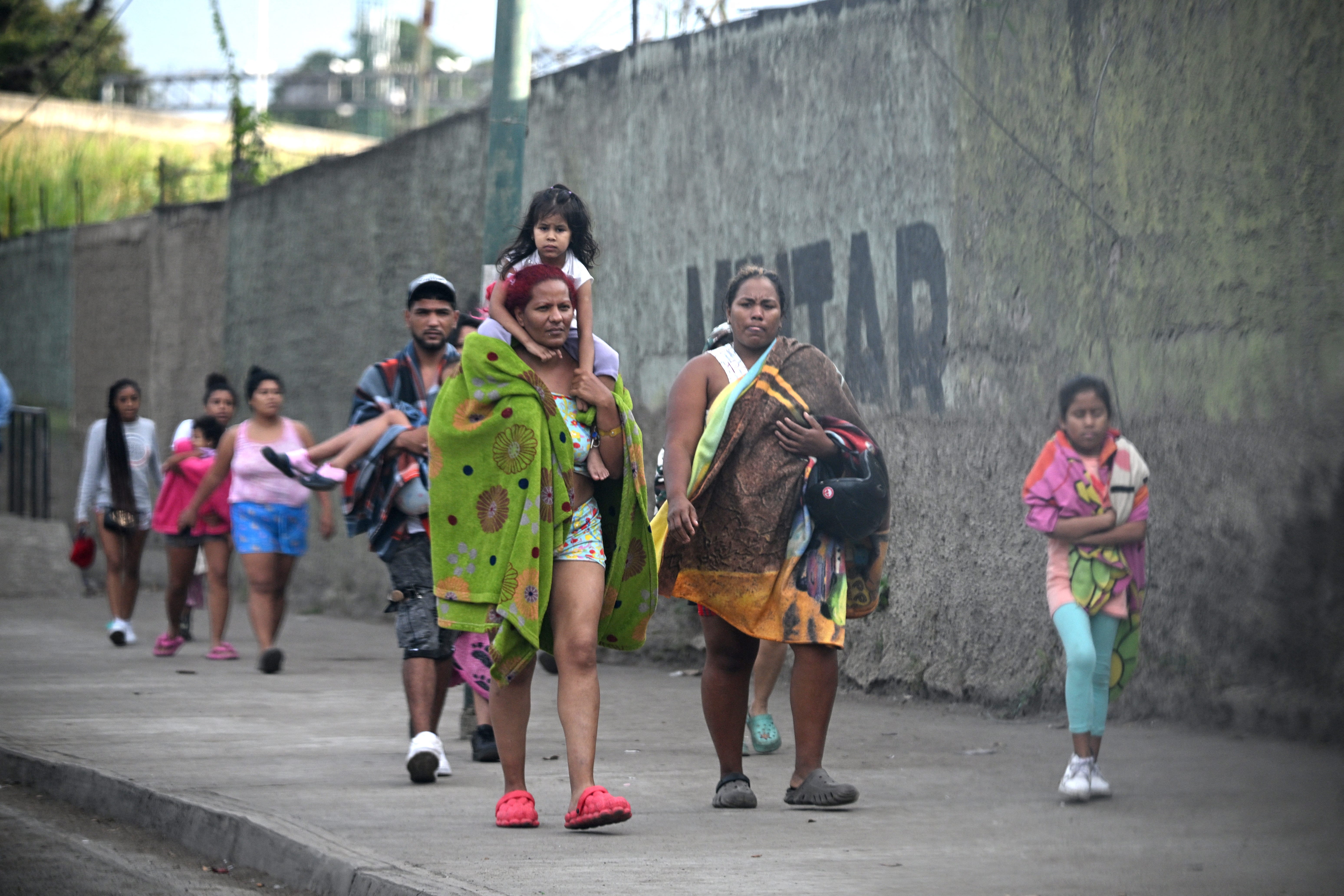
" style="max-width:100%; height:auto; border-radius:6px; margin:10px 0;" loading="lazy" /> Picture of fire at Fuerte Tiuna, Venezuela's largest military complex, after a series of explosions in Caracas on January 3, 2026. Loud explosions, accompanied by sounds resembling aircraft flyovers, were heard in Caracas around 2:00 am on January 3. Venezuela's President Nicolas Maduro is led in custody from a U.S. federal airplane before his scheduled court appearance at Manhattan federal court, at Stewart Air National Guard Base in Newburgh, New York, U.S. January 3, 2026. A photograph posted by U.S. President Donald Trump on his Truth Social account shows him sitting next to U.S. Secretary of State Marco Rubio as they watch the U.S. military operation in Venezuela from Trump's Mar a Lago resort, in Palm Beach, Florida, January 3, 2026. Fire at Fuerte Tiuna, Venezuela's largest military complex, is seen from a distance after a series of explosions in Caracas on January 3, 2026. Picture showing damages to a building in the port of La Guaira, Venezuela, after a US military operation that led to the capture of President Nicolas Maduro, on January 3, 2026. Smoke rises from explosions in Caracas, Venezuela, January 3, 2026, in this screen grab obtained from video obtained by Reuters. Helicopters fly past plumes of smoke rising from explosions, in Caracas, Venezuela, January 3, 2026 in this screen grab obtained from video obtained by Reuters. A military personnel member walks past debris at La Carlota military air base, after U.S. President Donald Trump said the U.S. has struck Venezuela and captured its President Nicolas Maduro, in Caracas, Venezuela, Jan. 3, 2026. Civilians who were living inside Fuerte Tiuna, Venezuela's largest military complex leave the compound, in Caracas on Jan. 3, 2026. A column of smoke rises during multiple explosions in the early hours of the morning, in Caracas, Venezuela, January 3, 2026 in this screen grab obtained from video obtained by Reuters. A destroyed anti-aircraft unit at La Carlota military air base, after U.S. President Donald Trump said the U.S. has struck Venezuela and captured its President Nicolas Maduro, in Caracas, Venezuela, Jan. 3, 2026. A firefighter walks past a destroyed anti-aircraft unit at La Carlota military air base, after U.S. President Donald Trump said the U.S. has struck Venezuela and captured its President Nicolas Maduro, in Caracas, Venezuela, January 3, 2026. Destroyed vehicles at La Carlota military air base, after U.S. President Donald Trump said the U.S. has struck Venezuela and captured its President Nicolas Maduro, in Caracas, Venezuela, January 3, 2026. A member of the National Guard stands guard at Fuerte Tiuna, Venezuela's largest military complex, in Caracas on Jan. 3, 2026, after U.S. forces captured Venezuelan leader Nicolas Maduro after launching a A Colombian soldier stands guard at the border between Venezuela and Colombia, after U.S. President Donald Trump said the U.S. has struck Venezuela and captured its President Nicolas Maduro, in Cucuta, Colombia, January 3, 2026. Colombian police and military personnel stand guard at the border between Venezuela and Colombia, after U.S. President Donald Trump said the U.S. has struck Venezuela and captured its President Nicolas Maduro, in Cucuta, Colombia, January 3, 2026. A destroyed anti-aircraft unit at La Carlota military air base, after U.S. President Donald Trump said the U.S. has struck Venezuela and captured its President Nicolas Maduro, in Caracas, Venezuela, January 3, 2026. A man walks next to military vehicles as Colombian soldiers patrol the border between Venezuela and Colombia, after U.S. President Donald Trump said the U.S. has struck Venezuela and captured its President Nicolas Maduro, in Cucuta, Colombia, January 3, 2026. Passengers sleep on the floor, after flights were delayed and cancelled when the airspace was closed due to U.S. strikes on Venezuela overnight, at Rafael Hernandez International Airport in Aguadilla, Puerto Rico January 3, 2026. U.S. Air Force F-22 Raptor fighter jets sit parked on the tarmac at the former Roosevelt Roads naval base, after U.S. President Donald Trump said the U.S. has struck Venezuela and captured its President Nicolas Maduro and his wife Cilia Flores, in Ceiba, Puerto Rico, January 3, 2026. Colombian soldiers in a military vehicle at the border between Venezuela and Colombia, after U.S. President Donald Trump said the U.S. has struck Venezuela and captured its President Nicolas Maduro, in Cucuta, Colombia, January 3, 2026. A car drives on an empty street, after U.S. President Donald Trump said the U.S. has struck Venezuela and captured its President Nicolas Maduro, in Caracas, Venezuela January 3, 2026. A cyclist stops to check their phone, after U.S. President Donald Trump said the U.S. has struck Venezuela and captured its President Nicolas Maduro, in Caracas, Venezuela January 3, 2026. F-22, C-130 and F-35 aircraft are seen at the former Roosevelt Roads naval base, after U.S. President Donald Trump said on Saturday the U.S. has struck Venezuela and captured its President Nicolas Maduro, in Ceiba, Puerto Rico, January 3, 2026. A supporter of Venezuelan President Nicolas Maduro holds a flag of Venezuela on an empty street near Miraflores Palace, after U.S. President Donald Trump said the U.S. has struck Venezuela and captured President Maduro, in Caracas, Venezuela, January 3, 2026. A person wears a Venezuelan flag, as they and others react to the news after U.S. President Donald Trump said the U.S. has struck Venezuela and captured its President Nicolas Maduro, in Miami, Florida, U.S., January 3, 2026. People react to the news after U.S. President Donald Trump said the U.S. has struck Venezuela and captured its President Nicolas Maduro, on the streets of Miami, Florida, U.S., January 3, 2026. A person wearing a hat that reads A man holds a flag reading A photograph posted by U.S. President Donald Trump on his Truth Social account shows him sitting next to CIA Director John Ratcliffe as they watch the U.S. military operation in Venezuela, January 3, 2026. Armed supporters of Venezuelan President Nicolas Maduro block the entrace to the 23 de enero neighborhood in Caracas on January 3, 2026, after US forces captured him. Picture showing damages to the port of La Guaira, Venezuela, after a US military operation that led to the capture of President Nicolas Maduro, on January 3, 2026. An armed supporter of Venezuelan President Nicolas Maduro blocks the entrace to the 23 de enero neighborhood in Caracas on January 3, 2026, after US forces captured him. Venezuela's Attorney General Tarek William Saab, raises his clenched fist as he leaves the vice-presidency building in Caracas on January 3, 2026, after US forces captured Venezuela's President Nicolas Maduro. The airplane carrying Venezuelan President Nicolas Madura lands at Stewart Air National Guard Base in Newburgh, N.Y. at approximately 4:30pm Jan. 3, 2026. A motorcade carrying ousted Venezuelan president Nicolas Maduro leaves the Westside Heliport in New York on January 3, 2026. Venezuelan President Nicolas Maduro arrived Saturday evening at a military base in the United States after his capture by US forces in Caracas. Maduro was seen surrounded by FBI agents as he descended the boarding stairs of a US government plane at a New York state National Guard facility, and was slowly escorted along the tarmac. A helicopter carrying ousted Venezuelan president Nicolas Maduro comes in to land at the Westside Heliport in New York on January 3, 2026. Venezuelan President Nicolas Maduro arrived Saturday evening at a military base in the United States after his capture by US forces in Caracas. Maduro was seen surrounded by FBI agents as he descended the boarding stairs of a US government plane at a New York state National Guard facility, and was slowly escorted along the tarmac.

US bombs targets in Venezuela and captures Nicolás Maduro

The U.S. captured Venezuelan President Nicolás Maduro in a military operation early Jan. 3, bringing him to New York City to face drug-trafficking charges.Maduro pleaded not guiltyin federal court on Jan. 5. Delcy Rodríguez, who served as Maduro's vice president,has been sworn inas the country's interim president.

Trump told NBC that elections won't be held in Venezuela in the next 30 days.

"We have to fix the country first," he said. "You can't have an election. There's no way the people could even vote."

The president listed multiple members of his administration who are helping to oversee Venezuela's intervention, but responded to a question about who is ultimately in charge by saying, "me."

Trump has focused on Venezuela's oil resources in the aftermath of the U.S. military operations. He told NBC that it could take less than 18 months to revive Venezuelan oil production, with the U.S. potentially reimbursing American oil companies for their investment.

President Donald Trump speaks to the media aboard Air Force One en route to Washington, DC on January 04, 2026. T

"A tremendous amount of money will have to be spent, and the oil companies will spend it, and then they'll get reimbursed by us, or through revenue," Trump said.

Oil companies weren't briefed on the military operation before it occurred,Trump said, but the administration has been "talking to the concept of, 'what if we did it?'"

"The oil companies were absolutely aware that we were thinking about doing something," the president told NBC. "But we didn't tell them we were going to do it."

A Reuters/Ipsos poll released Jan. 5found that72% of Americansare concerned about the U.S. getting too involved in Venezuela. Trump said America isn't at war with the Latin American country.

"No, we're not," he told NBC. "We're at war with people that sell drugs. We're at war with people that empty their prisons into our country and empty their drug addicts and empty their mental institutions into our country."

Contributing: Bart Jansen

This article originally appeared on USA TODAY:Trump says oil companies could be 'reimbursed' for Venezuela spending

Trump says oil companies could be 'reimbursed' for Venezuela spending

President Donald Trumpsaid in a new interview that the U.S. could help finance improvements to Venezuela's oil infras...
Doctor visits for flu symptoms have reached their highest level since the 1997-98 flu season, new CDC data show. - SimpleImages/Moment RF/Getty Images

Flu continues to bring misery across the US, with all but four states showing high or very high levels of activity as a new virus strain called subclade K continues to spread.

By another measure – visits to the doctor for fever plus a cough or sore throat, which are common flu symptoms – the US is at its highest level of respiratory illness since at least the 1997-98 flu season, according todatapublished Monday by the US Centers for Disease Control and Prevention.

"This is definitely a banner year," said Dr. Caitlin Rivers, an epidemiologist and senior scholar at Johns Hopkins Center for Health Security. "It's the worst we've had in at least 20 years. We're seeing a majority of the country is experiencing very high levels of activity, and we're still in the thick of it."

It's striking to see such an intense season coming off last year's bad flu season, she noted, as bad years don't typically occur back to back.

Nationally, about 8.2% of doctor visits were for flu-like symptoms during the last week of the year. At the same point last season, which was also brisk, that number was 6.7%.

In Massachusetts, which is reporting very high levels of flu activity, health officials urged people to get vaccinated.

"This is a moment for clarity, urgency, and action," Public Health Commissioner Dr. Robbie Goldstein said in a news release. "These viruses are serious, dangerous, and life-threatening. We are seeing children who are seriously ill, families grieving devastating losses, and hospitals under capacity strain.

"There is a simple, effective, and available way to address these concerns: vaccines," he added. "They can prevent serious illness and hospitalization. And they save lives. If you have not yet been vaccinated against flu or COVID-19 this season, now is the time. It is not too late. Choosing vaccination is choosing to protect yourself, your family, your friends, your colleagues, and your community."

Nearly all US states were at high or very high levels of flu activity in the latest data. Montana and Vermont reported low levels of activity, while South Dakota and West Virginia reported moderate levels. Nevada didn't report flu data this week but showed high levels of flu activity in last week's report.

In terms of severity – how many people have been hospitalized by the flu – this season is not a standout yet. The cumulative hospitalization rate is the third highest by this point in the season since 2010-11, but that could change as more people are infected.

"In the next 48 hours, if you haven't been vaccinated, get vaccinated. Don't wait," said Dr. Michael Osterholm who directs the Center for Infectious Disease Research and Policy at the University of Minnesota. "You know, you may still be able to protect yourself from the the last parts of the seasonal epidemic, but you know, it takes us, seven to 10 days to develop some immunity relative to the vaccine, and so you don't have a lot of time to waste," he added.

The CDC estimates that at least 11 million people have had the flu this season, 120,000 have been hospitalized with it and 5,000 people have died.

The agency also received another report of a child's death, bringing the total number of children who've died of influenza this season to nine.

Flu vaccinations have been dropping in children, from a high of 53% over the 2019-20 flu season to 42% at the same point this season.

The new flu data came the same day the US Department of Health and Human services announced a plan to modify the childhood vaccine schedule. The changes would recommend that kids get flu vaccines after a consultation with a health care provider, a provision called shared clinical decision-making, which could make the shots harder for people to access.

"To back off on a flu recommendation in the midst of a pretty severe flu year seems to me to be pretty tone-deaf, and that's coming off an influenza year where we had the most childhood deaths from influenza in many years," said Dr. Sean O'Leary, chair of the American Academy of Pediatrics' Committee on Infectious Diseases.

Shots are also down in adults, from nearly 61 million in 2019-20 to roughly 48 million this year,CDC data shows.

Rivers said she didn't think the lagging vaccination rates were playing a role in the high volume of cases this year.

"The vaccine is not really expected to protect against infection and therefore transmission. It's really just about preventing severe illness," she said.

Instead, she says, the new flu strain – subclade K, which represents most viruses analyzed by labs – seems to be the reason for the intensity.

She said that strain is just different enough from the flu viruses people have been exposed to in the past to get around our immune defenses.

Subclade K began to spread after strains were chosen for this year's flu shots, which means the vaccines probably offer only partial protection against it.

"I think that this virus, like we saw in Australia and Japan and to some degree in the United Kingdom, has some legs to it," Osterholm said. "I think you're going to continue to see activity in communities for at least another three to four weeks of some real, substantial nature."

CNN's Jen Christensen contributed to this report.

For more CNN news and newsletters create an account atCNN.com

Flu reaches highest level in the US in 25 years

Flu continues to bring misery across the US, with all but four states showing high or very high levels of activity as a new virus strain ca...
As Venezuela pauses winter baseball, MLB teams keep tabs on players

For now, the instability in Venezuela following theUnited States' attack on Caracashas had minimal impact on Major League Baseball, thanks largely to the timing of president Nicolás Maduro's capture and transfer to New York, where on Jan. 5he pleaded not guiltyto drug trafficking charges.

Still, there are immediate affects in Venezuela and bigger-picture concerns as the game's calendar drifts toward February.

The Liga Venezolana de Béisbol Profesional postponed its playoffs following the raid in the early morning hours of Jan. 3, and announced competition isscheduled to resumeWednesday, Jan. 7 after a four-day delay.

Meanwhile, major league teams are aiming to keep connected to personnel there.

"We created a player and staff chat making sure everyone is safe and to keep communication fluid,"Chicago White Soxgeneral manager Chris Getz told USA TODAY Sports. "It's all been positive in regard to safety.

"Obviously, there's some anxiety with the unknowns, but people seem optimistic better days are ahead for their families."

Venezuela's winter ball playoffs – a five-team, 16-game round-robin tournament – run through January and several MLB players are participating, most notablyMilwaukee Brewersoutfielder Jackson Chourio, who hit a game-winning home run for his club, Aguilas del Zulia, just hours before the raid on Caracas began.

Since 2000, future Hall of Famer Albert Pujols' 101.3 Wins Above Replacement (WAR) leads all players, with Alex Rodriguez tied for second ways back at 89.7 WAR. See the rest of the top 25. 2. Alex Rodriguez - 89.7 3. Adrian Beltre - 89.7 4. Mike Trout - 87.5 5. Justin Verlander - 82.2 6. Clayton Kershaw - 78.1 7. Mookie Betts - 75.2 8. Max Scherzer - 74.7 9. Zack Greinke - 72.4 10. Robinson Cano - 68.7 11. Miguel Cabrera - 67.2 12. Carlos Beltran - 65.1 13. Chase Utley - 64.6 14. Freddie Freeman - 64.2 15. Paul Goldschmidt - 63.8 16. Joey Votto - 63.6 17. Roy Halladay - 62.4 18. Aaron Judge - 62.3 19. CC Sabathia - 61.8 20. Manny Machado - 61.7 21. Ichiro Suzuki - 60 22. Mark Buehrle - 60 23. Barry Bonds - 59.1 24. Evan Longoria - 58.9 25. Chipper Jones - 58.3

Top 25 MLB players from 2000-2025 ranked by Wins Above Replacement

Like many MLB players participating in winter leagues throughout the Caribbean, Chourio was scheduled to play just a portion of the postseason for his club before preparing in earnest for the Brewers' 2026 season. Major league spring training camps begin opening Feb. 9, though both domestic and international players often begin working out at or near their facilities far sooner.

Chourio was one of 63 Venezuelan players on major league opening-day rosters, the largest foreign-born contingent behind the Dominican Republic's 100 players.

"We don't have much info at the moment but are trying to follow up," Brewers president of baseball operations Matt Arnold told theMilwaukee Journal Sentinel, part of the USA TODAY Network, via a team spokesperson. "We know the airports have been shut down but not much beyond that."

Travel to and from Venezuela has grown more complex in the past quarter-century, beginning with greater scrutiny of passports and visas in the wake of 9/11. In 2002, a general strike and brief overthrow of then-president Hugo Chavez roiled Venezuela, and many veteran ballplayers and MLB personnel from Venezuela have opted to relocate to the USA.

Hall of Fame-caliber players such as Miguel Cabrera and Salvador Perez have become U.S. citizens, but for younger players, travel between the countries has grown increasingly difficult. The U.S. ended diplomatic relations with Venezuela – closing its embassy – in 2019, and players must seek visas from neighboring Colombia or other Latin American countries.

As a result of such complications, MLB franchises are accustomed to keeping close tabs on players and staff in Venezuela during the winter, a protocol that gained greater urgency this month. Venezuela is slated to compete in the World Baseball Classic beginning in March, with catcher Perez serving as team captain. National stars Ronald Acuña Jr. and Jose Altuve have expressed interest in returning to the squad, according to MLB.com. Venezuela is scheduled to begin its WBC slate with a March 6 game against the Netherlands in Pool D, at Miami's LoanDepot Park.

Contributing: Bob Nightengale

This article originally appeared on USA TODAY:Venezuela winter baseball shutdown has MLB monitoring talent

As Venezuela pauses winter baseball, MLB teams keep tabs on players

For now, the instability in Venezuela following theUnited States' attack on Caracashas had minimal impact on Major Le...


HOT POINT © 2015 | Distributed By My Blogger Themes | Designed By Templateism.com