America First? What Trump's startling arrest of Maduro tells us.

As it turns out, the "America First" slogan didn't mean PresidentDonald Trumpwould stop the United States from intervening around the world.

More:President Trump's stunning start: Reshape the government, remake the world

The capture of Venezuelan President Nicolás Maduro in Caracas on Jan. 3 and his pending arraignment in New York on charges of narco-terrorism are more evidence that this commander-in-chief is willing to assert U.S. economic, energy and security interests across the globe not only with forceful rhetoric but also with force itself.

"This was a very important symbol," Trump said in an interview on Fox News. "It said this thing, that we're not going to be pushed around by these countries." With elite military teams and cutting-edge equipment, he boasted, "Nobody can stop us."

Since his inauguration a year ago, a new Trump Doctrine has emerged.

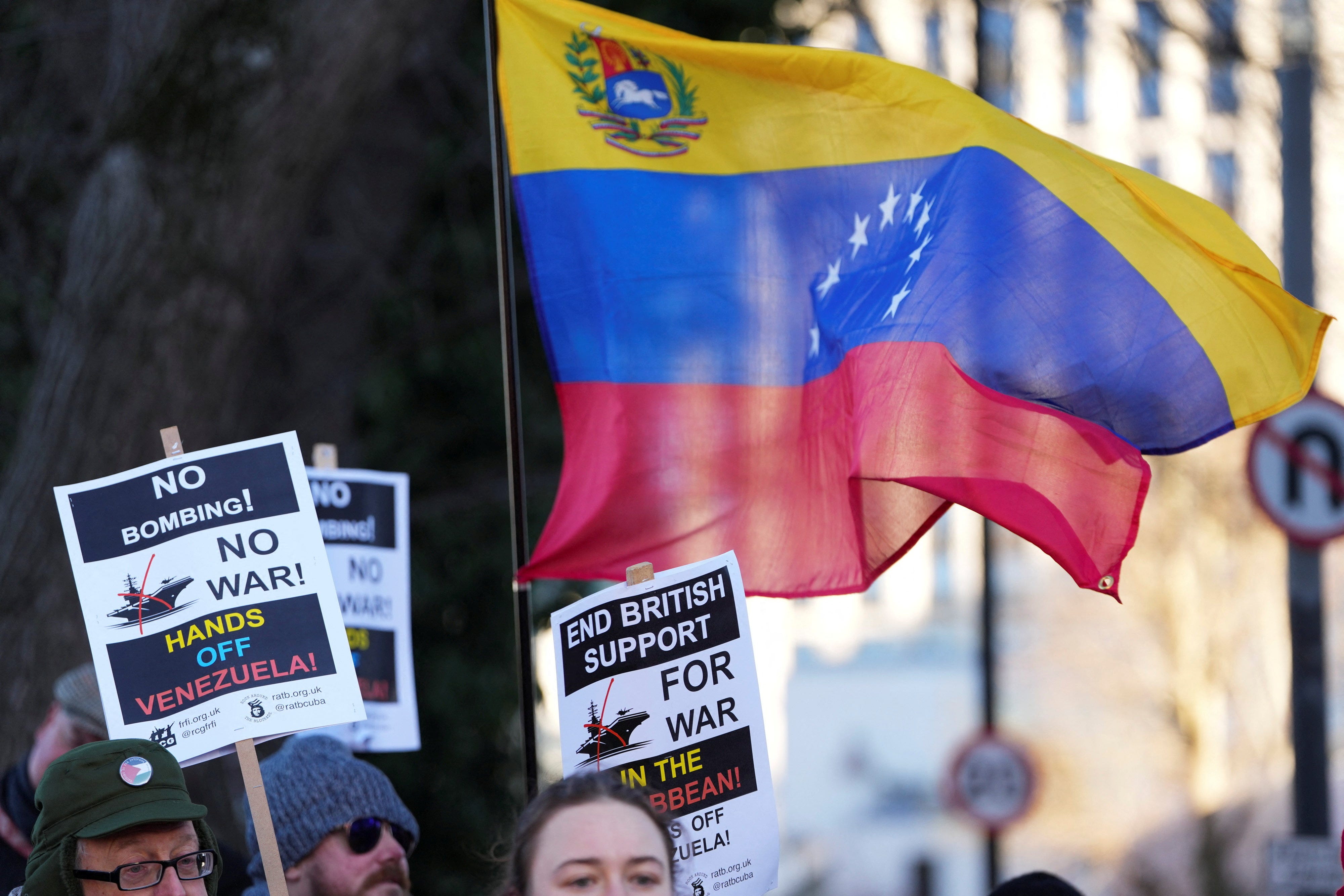
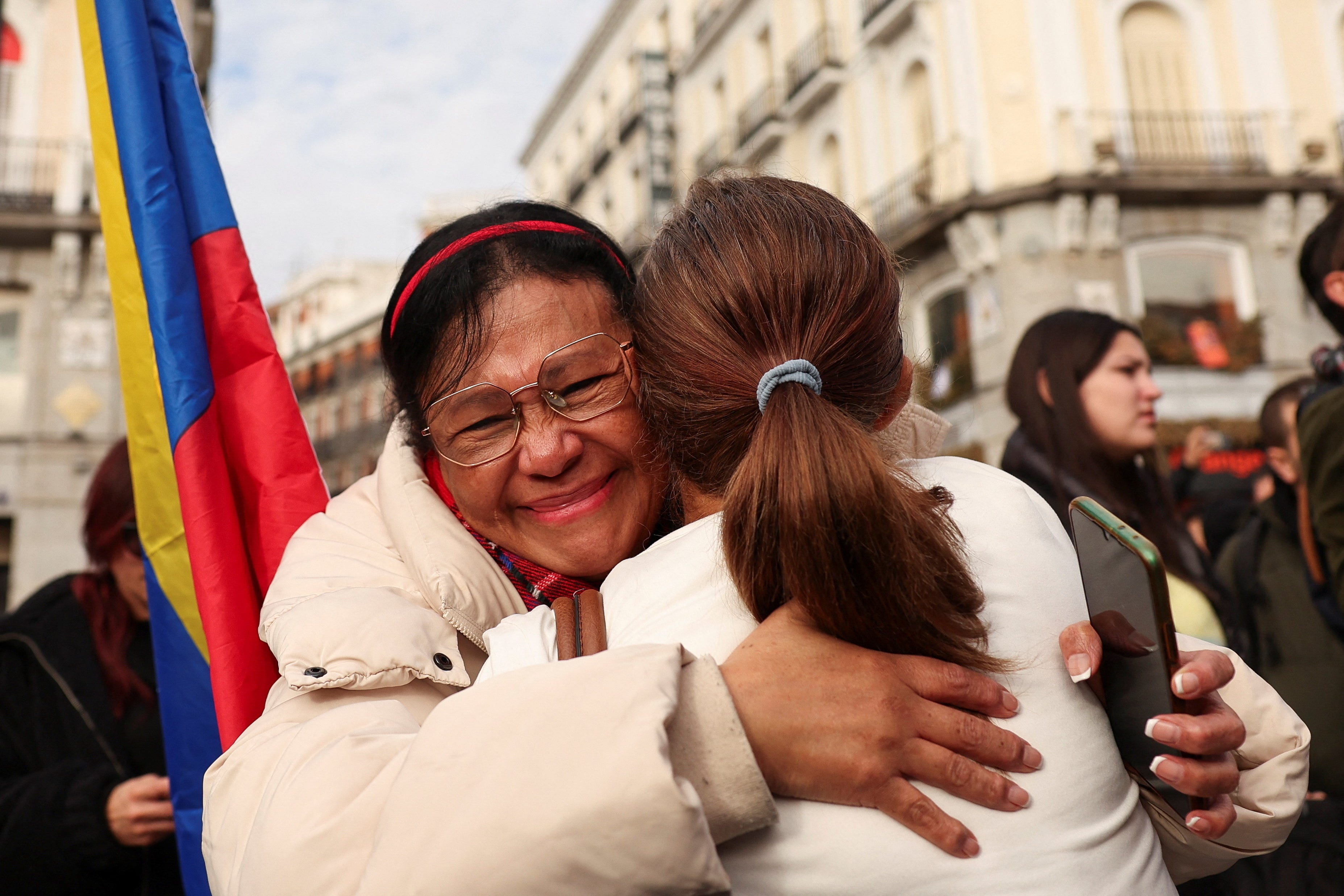
<p style=Reactions to the United States' bombing of Venezuela and capture of the country's president Nicolás Maduro ranged across the world. Some celebrated the operation while others rebuked Trump's intervention in the South American country. See the reactions in photos, beginning here with Venezuelans living in Chile celebrating in Santiago on January 3, 2026.

" style="max-width:100%; height:auto; border-radius:6px; margin:10px 0;" loading="lazy" /> A child holds a placard saying A woman reacts to the news after U.S. President Donald Trump said the U.S. has struck Venezuela and captured its President Nicolas Maduro, in Madrid, Spain, January 3, 2026. Armed supporters of Venezuela's President Nicolas Maduro gather near the Miraflores presidential palace in Caracas on January 3, 2026, after US forces captured him. A Venezuelan man living in Chile celebrates with a national flag and his car reading Venezuelans living in Chile celebrate in Santiago on January 3, 2026, after US forces captured Venezuelan leader Nicolas Maduro after launching a A man holds up a portrait of late Venezuela's leader (1999-2013) Hugo Chavez in Caracas on January 3, 2026, after US forces captured Venezuelan leader Nicolas Maduro. Activists of Socialist Unity Centre of India (SUCI) burn an effigy of US President Donald Trump during a rally in Kolkata on January 3, 2026, to protest against the recent US attack on Venezuela. A supporter of Nicolas Maduro holds a portrait of the Venezuelan President during a gathering near the Palacio de Miraflores in Caracas on January 3, 2026, after US forces captured Venezuelan leader Nicolas Maduro after launching a Venezuelans living in Chile celebrate in Santiago on January 3, 2026, after US forces captured Venezuelan leader Nicolas Maduro after launching a Venezuelans living in Chile celebrate in Santiago on January 3, 2026, after US forces captured Venezuelan leader Nicolas Maduro after launching a Demonstrators hold up a banner with the lettering reading 'Stop Trump - Free Venezuela' during a rally organised by left-wing 'Anti-Imperialist Coordination' (Antiimperialistische Koordination - AIK) under the motto 'Hands off Venezuela' at Vienna's Votive Park on January 3, 2026. The EU called for Demonstrators march with a banner with the lettering reading 'Hands off Venezuela' during a rally organised by left-wing 'Anti-Imperialist Coordination' (Antiimperialistische Koordination - AIK) in Vienna on January 3, 2026. The EU called for Venezuelans living in Peru celebrate outside the Venezuelan Embassy in Lima on January 3, 2026, after US forces captured Venezuelan leader Nicolas Maduro. President Donald Trump said Saturday that US forces had captured Venezuela's leader Nicolas Maduro after bombing the capital Caracas and other cities in a dramatic climax to a months-long standoff between Trump and Venezuelan. Venezuelans living in Peru celebrate outside the Venezuelan Embassy in Lima on January 3, 2026, after US forces captured Venezuelan leader Nicolas Maduro. President Donald Trump said Saturday that US forces had captured Venezuela's leader Nicolas Maduro after bombing the capital Caracas and other cities in a dramatic climax to a months-long standoff between Trump and Venezuelan. Venezuelans living in Peru celebrate at the Miguel de Cervantes park, near the Venezuelan Embassy in Lima on January 3, 2026, after US forces captured Venezuelan leader Nicolas Maduro. Venezuelans living in Peru dance to celebrate at the Miguel de Cervantes park, near the Venezuelan Embassy in Lima on January 3, 2026, after US forces captured Venezuelan leader Nicolas Maduro. A Venezuelan woman living in Peru celebrates with a national flag at the Miguel de Cervantes park, near the Venezuelan Embassy in Lima on January 3, 2026, after US forces captured Venezuelan leader Nicolas Maduro. Activists of Socialist Unity Centre of India (SUCI) protest against the recent US attack on Venezuela, in Kolkata on January 3, 2026. Members of the Communist Party of Britain (CPB) group hold banners outside the U.S. Embassy in London calling for People embrace next to a Venezuelan flag, as they react to the news after U.S. President Donald Trump said the U.S. has struck Venezuela and captured its President Nicolas Maduro, in Madrid, Spain, January 3, 2026.

See reactions after US explosions in Venezuela, Maduro capture

Reactions to theUnited States' bombing of Venezuela and capture of the country's president Nicolás Maduroranged across the world. Some celebrated the operation while others rebuked Trump's intervention in the South American country. See the reactions in photos, beginning here with Venezuelans living in Chile celebrating in Santiago on January 3, 2026.

On his watch, the United States has cited a variety of reasons for bombing a half-dozen countries, including a Christmas Day strike in Nigeria in response to what he described as attacks on Christians.

He has hit Iran's nuclear sites with bunker-busting bombs, a step that previous presidents had refused to take despite Israeli entreaties. The day before the Venezuelan operation that captured Maduro, Trump warned Iran that if peaceful protesters on its streets were killed, the U.S. was "locked and loaded and ready to go" to rescue them.

That threat "is everything we voted against in '24," said former MAGA loyalist Marjorie Taylor Greene, now a Trump critic.

She was referring to "America First," a slogan Trump used in all three of his presidential campaigns. Greene and other core supporters interpreted that as a pledge to avoid foreign entanglements, especially those that could risk "endless wars" like those in Iraq and Afghanistan.

Instead, as president, he was promising to focus on problems within U.S. borders.

From Gaza to Caracas, shaping new governments

But during his second term, Trump's approach to the world has stood in clear contrast to that. He has been willing not only to deploy force abroad but also to commit the United States to shaping the foreign regimes that follow.

After pushing for a ceasefire between Israel and Hamas, he appointed himself chairman of the "Board of Peace" tasked with establishing security and encouraging economic development in Gaza.

In Venezuela, he said Washington wouldn't leave until a new and friendly government was installed.

"We're going to run the country until such time we can do a safe, proper and judicious transition," he said, though he didn't detail precisely what that would entail. He warned would-be leaders of Venezuela who might want to defy the United States: "What happened to Maduro could happen to them."

"Where will this go next?" protestedVirginia Sen. Tim Kaine, a Democrat. "Will the President deploy our troops to protect Iranian protesters? To enforce the fragile ceasefire in Gaza? To battle terrorists in Nigeria? To seize Greenland or the Panama Canal?"

President Donald Trump, alongside (L/R), CIA Director John Ratcliffe, Secretary of State Marco Rubio and Secretary of Defense Pete Hegseth, speaks to the press following US military actions in Venezuela, at his Mar-a-Lago residence in Palm Beach, Florida, on January 3, 2025. Trump said Saturday that US forces had captured Venezuelan leader Nicolás Maduro after launching a

That said, the Trump Doctrine also has boundaries.

For one, he has generally avoided deploying ground troops, which is typically a more dangerous duty than bombing strikes by planes or drones.

"We're not afraid of boots on the ground if we have to have them," he said at an hour-long news conference at his Mar-a-Lago retreat. But he later demurred that the only U.S. forces he foresaw in Venezuela would be protecting oil fields.

For another, he has cited as motivation for acting not what he sees as a gauzy pursuit of democracy and human rights but rather the hard-headed calculation of national interests, especially financial ones and especially involving energy.

He brushed off criticism that the administration hadn't notified Congress before assault launching Operation Absolute Resolve in Venezuela.

Democrats were "weak, stupid people," he said on Fox. "They should say 'great job.' They shouldn't say, 'Oh, gee, maybe it's not constitutional.'"

Echoes of Noriega arrest – and President Monroe's doctrine

Much of what Trump has done in the White House has been unprecedented.

Not this time.

In December 1989, President George H.W. Bush ordered an invasion of Panama and the capture of Panamanian President Manuel Noriega on charges of drug trafficking and racketeering. (As it happened, Noriega was taken into custody in 1990 on Jan. 3, precisely 36 years prior to Maduro.) Noriega would be tried in Miami and convicted, serving 17 years in a U.S. prison.

More:What a century of US interventions in Latin America say about Trump's Venezuela gambit

In an address to the nation at the time, Bush said the invasion was justified because Panama had declared a state of war with the United States, and because it was needed to protect American citizens living in Panama and to defend democracy and human rights.

He didn't seek congressional authorization, either. The operation also sparked international outrage.

Venezuelan leader Nicolás Maduro, pictured here after his capture aboard the USS Iwo Jima, is seen in this handout image posted by U.S. President Donald Trump on Truth Social Jan. 3, 2026. The United States captured Maduro and his wife in an overnight military operation on Jan. 3, 2026, Trump said, as explosions rocked Caracas and targets across the country.

Trump's assertion of U.S. dominance of the Western hemisphere has a much longer history. The Monroe Doctrine, articulated by President James Monroe in 1823, held that any intervention by a foreign power in the Americas would be viewed as a hostile act. Since then, it was often cited to justify U.S. intervention in Latin America.

More:Will Venezuela buckle under Trump? Maduro wouldn't be the first to fall

Trump mentioned it, too, as he took a victory lap at his news conference.

A "spectacular assault" had brought an "outlaw dictator" to justice, he said. When a reporter asked how running a South American country was "America First," he replied mildly that the United States needed "good neighbors," regional stability and access to oil.

Under Maduro, Venezuela had violated "core principles of American foreign policy, dating back more than two centuries ... all the way back to the Monroe doctrines," Trump said, warming to the topic. "The Monroe Doctrine is a big deal, but we have superseded it by a lot, by a real lot. They now call it the 'Don-Roe' Doctrine."

He dismissed out of hand the reality that U.S. intervention in Latin America has had decidedly mixed results. "Not with me," he said. "We have a perfect record of winning."

Next question?

This article originally appeared on USA TODAY:What Maduro's startling arrest tells us about Trump's foreign policy

America First? What Trump's startling arrest of Maduro tells us.

As it turns out, the "America First" slogan didn't mean PresidentDonald Trumpwould stop the United States f...
Who is Cilia Flores? Nicolás Maduro's wife named in US indictment

When the United States conducted anovernight military strike on Venezuelaon Saturday morning, Jan. 3, not only was the nation's leader,Nicolás Maduro, captured, but so was his wife, Cilia Flores.

Flores, 69, and her husband have been indicted in the Southern District of New York; however, U.S. Attorney GeneralPam Bondidid not initially share the charges against the Venezuelan former first lady. According to anX post shared by Bondi, Maduro is facing charges of "Narco-Terrorism Conspiracy, Cocaine Importation Conspiracy, Possession of Machineguns and Destructive Devices, and Conspiracy to Possess Machineguns and Destructive Devices against the United States."

Maduro and Flores are expected to arrive at New York Stewart International Airport in Orange County, New York, about 80 minutes north of Manhattan, on Saturday, Jan. 3, according toCBS Newsand MS Now. The couple was captured in Caracas, Venezuela, and flown by helicopter to theUSS Iwo Jima, which is an amphibious assault ship.President Donald Trump posted an imageof Maduro aboard the warship on Truth Social.

"We're going to run the country until such time as we can do a safe, proper and judicious transition," Trump said during a news conference on Saturday following the strike.

With all eyes on Venezuela, here's what to know about the nation's former first lady.

<p style=The United States captured Venezuelan leader Nicolás Maduro and his wife in an overnight military operation on Jan. 3, 2026, President Donald Trump said, as explosions rocked Caracas and targets across the country. See Maduro's years of leadership in photos, beginning here after he was sworn in for a third six-year term, in Caracas, Venezuela, on Jan. 10, 2025.

" style="max-width:100%; height:auto; border-radius:6px; margin:10px 0;" loading="lazy" /> Nicolás Maduro, deputy for Venezuela's ruling party, addresses a crowd of supporters of President Hugo Chavez in March 2004 in Caracas. The President of Venezuela's National Assembly, Nicolás Maduro, delivers a speech during a massive May Day demonstration at Havana's Plaza de la Revolución (Revolution Square), May 1, 2005. More than one million people, according to official estimates, gathered to commemorate International Labor Day, as Cuban leader Fidel Castro honored the common worker and condemned Venezuelan President Hugo Chavez (L) speaks with Venezuelan Foreign Minister Nicolás Maduro during the signing of an agreement with Chinese businessmen on Oct. 17, 2006, in the Miraflores presidential palace in Caracas. Foreign Minister of Venezuela Nicolás Maduro Moros speaks to the 62nd session of the UN General Assembly, Oct.2, 2007 at the United Nations in New York. Venezuelan President Nicolás Maduro delivers a speech before supporters gathering outside the presidential palace in Caracas on Mar. 12, 2015. Venezuela's President Nicolás Maduro takes part in a military drill in Charallave, Venezuela, on Jan. 14, 2017. Venezuela's President Nicolás Maduro (L) speaks during a gathering in support of him and his proposal for the National Constituent Assembly in Caracas, Venezuela, on June 27, 2017. Venezuela's President Nicolás Maduro greets supporters during his closing campaign rally in Caracas, Venezuela, on May 17, 2018. Venezuela's President Nicolás Maduro (R), flanked by his wife Cilia Flores (C), holds a Venezuelan flag while speaking from a balcony at Miraflores Presidential Palace to a crowd of supporters to announce he was breaking off diplomatic ties with the United States, during a gathering in Caracas on Jan. 23, 2019. Maduro announced he was breaking off diplomatic ties with the United States, after his counterpart, President Donald Trump, acknowledged opposition leader Juan Guaidó as the South American country's Nicolás Maduro gestures during a meeting with soldiers at a military base in Caracas, Venezuela, Jan. 30, 2019. Venezuelan President Nicolás Maduro (L) and his wife Cilia Flores attend a May Day rally in Caracas on May 1, 2019. Opposition supporters demonstrated for a second consecutive day in support of their country's self-proclaimed leader Juan Guaidó, as he bids to overthrow Maduro. Maduro and his government have vowed to put down what they see as an attempted coup by the US-backed opposition leader. Venezuelan President and presidential candidate Nicolás Maduro reacts following the presidential election results in Caracas on July 29, 2024. Maduro won reelection with 51.2 percent of the votes cast Sunday, the electoral council announced, after a campaign tainted by claims of opposition intimidation and fears of fraud. Venezuela's President Nicolás Maduro gestures next to first lady Cilia Flores during an event marking the 165th anniversary of the Battle of Santa Inés in Caracas on Dec. 10, 2024. Venezuela's President Nicolás Maduro walks with his wife Cilia Flores while leaving the Capitolio, home of the National Assembly, after taking the oath during the presidential inauguration in Caracas on Jan. 10, 2025. Maduro, in power since 2013, took the oath of office for a third term despite a global outcry that brought thousands out in protest on the ceremony's eve. Venezuela's President Nicolás Maduro gestures during a rally to mark the anniversary of late Venezuelan President Hugo Chavez's initial coup attempt in 1992, in Caracas, Venezuela, on Feb. 4, 2025. Venezuela's President Nicolás Maduro dances during a rally in Caracas on Dec. 1, 2025. Venezuela does not want Venezuela's President Nicolás Maduro kisses the national flag during a rally in Caracas on Dec. 1, 2025.

See moments from Nicolás Maduro's years of leadership in Venezuela

The United States captured Venezuelan leader Nicolás Maduroand his wife in an overnight military operation on Jan. 3, 2026, President Donald Trump said, as explosions rocked Caracas and targets across the country. See Maduro's years of leadership in photos, beginning here after he was sworn in for a third six-year term, in Caracas, Venezuela, on Jan. 10, 2025.

Who is Cilia Flores?

Flores is a Venezuelan lawyer and politician. Since 2015, she has served as a deputy in the National Assembly of Venezuela, of which she was president from 2006 to 2011, for her home state of Cojedes. She also previously served as Venezuela's attorney general from 2012 to 2013.

Throughout her legal career, Flores gained a reputation as a tough attorney, particularly after she led the defense team of former Venezuelan President Hugo Chávez and helped secure his release from prison in 1994, following an unsuccessful coup in 1992, according toReuters.

Flores became Venezuela's first lady when Maduro won the 2013 presidential election over Henrique Capriles.

"She has a fiery character. What you saw of her in parliament, that's exactly what she is like at home," Maduro said about his wife during a rally on his campaign trail, per Reuters.

Cilia Flores, wife of Venezuela's President Nicolas Maduro, speaks as she carries Gloryannys Machado, who arrived on a deportation flight carrying children of Venezuelan migrants deported from the United States, at Simon Bolivar International Airport, in Maiquetia, Venezuela July 18, 2025.

How did Cilia Flores gain prominence in Venezuela?

Being Maduro's wife did not solely propel Flores to prominence in Venezuela, as the law graduate from Caracas' Santa Maria University gained attention in 1994 when she defended Chávez and helped secure his release from prison, according to Reuters.

Four years after Chávez's release, Flores assisted him in winning the 1998 presidential election in Venezuela. Chávez served as Venezuela's president for 14 years until his death in March 2013.

Flores became "the most powerful woman in Venezuelan politics" following Chávez's presidential win, per Reuters. The former president was the one to name Flores his attorney general in 2012.

As Chávez died from cancer, Flores became a defender of the nation's government at key moments, including defending it against opposition accusations about a possible power vacuum.

"She has been an excellent official who completed the president's instructions to the letter," a senior National Assembly official who worked closely with Flores told Reuters in 2013.

The same official predicted that Flores would be her newly elected husband's "strong arm." "She has authority, the ability to command, and she is a woman who moves quietly," the official added.

Venezuela's President Nicolas Maduro gestures next to his wife Cilia Flores during his arrival for a special session of the National Constituent Assembly to present his annual state of the nation in Caracas, Venezuela, January 14, 2019.

Why was Cilia Flores captured?

The charges Flores will face in the United States were initially unclear; however, in Bondi's X post, she wrote that Maduro and his wife will "soon face the full wrath of American justice on American soil in American courts."

In her social media post, Bondi also called Maduro and Flores "two alleged international narco traffickers."

The allegations against Flores came to light in theunsealed indictment shared by Bondi, in which the U.S. government said: "That massive-scale drug trafficking has also concentrated power and wealth in the hands of MADURO MOROS's family, including his wife, the purported First Lady of Venezuela." Maduro's son, Nicolas Ernesto Maduro Guerra, is also named in the indictment as a defendant.

According to the indictment, Flores, who married Maduro "in or about 2013," is being charged with cocaine importation conspiracy, possession of machineguns and destructive devices and conspiracy to possess machineguns and destructive devices.

Contributing: Reuters

Jonathan Limehouse covers breaking and trending news for USA TODAY. Reach him at JLimehouse@gannett.com.

This article originally appeared on USA TODAY:Who is Cilia Flores? Nicolás Maduro's wife named in US indictment

Who is Cilia Flores? Nicolás Maduro’s wife named in US indictment

When the United States conducted anovernight military strike on Venezuelaon Saturday morning, Jan. 3, not only was the na...
Photos show residents evacuating after explosions in Caracas, Venezuela

CARACAS, Venezuela (AP) — The United Stateshit Venezuela with a "large-scale strike"early Saturday and said its president, Nicolás Maduro, had been captured and flown out of the country aftermonths of stepped-up pressureby Washington.

People fled in panic as the explosions went off around them. The government has accused the U.S. of attacking civilian and military sites.

This is a photo gallery curated by AP photo editors.

Photos show residents evacuating after explosions in Caracas, Venezuela

CARACAS, Venezuela (AP) — The United Stateshit Venezuela with a "large-scale strike"early Saturday and said its...
NASA's MAVEN Orbiter Set For Mission to Mars (Bill Ingalls / NASA via Getty Images)

For nearly a month, NASA has been scrambling to make contact with a spacecraft in orbit aroundMarsthat abruptly fell silent.

The space agency lost communication with theMAVEN probe(short for Mars Atmosphere and Volatile EvolutioN) on Dec. 6, and efforts to re-establish a connection have been futile. Based on bits of data received that day, mission controllers think the probe was spinning unexpectedly.

NASA now has to wait until Jan. 16 before it can again try to revive MAVEN, because Mars and Earth have been on opposite sides of the sun since Monday, resulting in a prolonged communications blackout.

Overall, it's not looking promising for one of NASA's workhorse missions.

Since the MAVEN spacecraftentered orbit around Mars in 2014, it has been studying the red planet's upper atmosphere, including a plasma layer known as the ionosphere, and investigating how and why Mars has been losing its atmosphere over billions of years. The spacecraft has also been instrumental in relaying communications between two rovers on the surface of Mars, Curiosity and Perseverance, and Earth.

NASA hasn't been able to reach MAVEN since it experienced what the agency called a "loss of signal" with ground stations on Earth on Dec. 6. At the time, the spacecraft was orbiting behind Mars, so the signal loss was routine and expected, as Mars always blocks MAVEN from phoning home during the maneuver. This time, however, when the probe re-emerged from behind the red planet, NASA could not pick up any signals from it.

NASA said it was "investigating the anomaly" in astatement on Dec. 9but provided few details. Mission controllers reported that all of MAVEN's subsystems had been working normally before it passed behind Mars.

In an update about a week later, NASA said no transmissions had been received from MAVEN since Dec. 4, but that engineers had recovered a brief fragment of tracking data from Dec. 6.

What they found was troubling: "Analysis of that signal suggests that the MAVEN spacecraft was rotating in an unexpected manner when it emerged from behind Mars," NASA officialssaid in a statement.

The space agency has been using a global array of giant radio antennas, known as the Deep Space Network, to send commands to MAVEN and monitor for any incoming signals. On Dec. 16 and 20, NASA tried snapping photos of MAVEN in orbit from the surface of Mars, using an instrument aboard the agency's Curiosity rover.

At the same time, mission controllers are closely analyzing the last fragments of tracking data recovered.NASA said on Dec. 23that it was attempting to piece together a timeline of events to figure out what went wrong. NASA did not provide additional details in a request for comment and referred NBC News to the agency's update on Dec. 23.

The MAVEN mission was originally designed to last just two years, but it has been operating continuously for more than a decade. In 2024, NASA celebrated the probe's 10th anniversary orbiting Mars.

By studying the process of atmospheric loss on Mars, MAVEN was helping scientists get a clearer picture of the planet's past and present climate and how ittransformed from a potentially habitable worldwith liquid water on its surface to the cold and barren planet that it is today.

The spacecraft is one of three that NASA currently has in orbit around Mars. The space agency also operates the Mars Reconnaissance Orbiter, which launched in 2005, and Mars Odyssey, which lifted off in 2001.

A NASA spacecraft orbiting Mars may be dead

For nearly a month, NASA has been scrambling to make contact with a spacecraft in orbit aroundMarsthat abruptly fell silent. The space age...
Trial to begin for police officer charged in delayed response to Uvalde school shooting

Families who lost loved ones in the 2022 attack onan elementary schoolin Uvalde, Texas, have sought for nearly four yearsto hold accountablethe police who waited more than an hour to confront the shooter while children and teachers lay dead or wounded in classrooms.

Now one of the first officers on the scene is about tostand trialon multiple charges of child abandonment and endangerment. Former Uvalde schools police officer Adrian Gonzales is accused of ignoring his training in a crisis with deadly consequences. His attorney insists he was focused on helping children escape from the building.

The trial that starts Monday offers potentially one of the last chances to see police answer for the long delay. The families have pinned their hopes on the jury after their gun-control efforts were rejected by lawmakers, and their lawsuits remain unresolved. A few parents ran for political office to seek change, with mixed results.

The proceedings will provide a rare example of an officer being criminally charged with not doing more to stop a crime and protect lives.

Jesse Rizo's niece was one of 19 children and two teachers killed by the teenage gunman in one of the deadliest school shootings in U.S. history. Nine-year-old Jackie Cazares still had a pulse when rescuers finally reached her, Rizo said.

"It really bothers us a lot that maybe she could have lived," he said.

Only two of the 376 officersfrom local, state and federal agencies on the scene have been charged — a fact that haunts Velma Lisa Duran, whose sister, Irma Garcia, was one of the teachers gunned down.

"What about the other 374?" Duran asked through tears. "They all waited and allowed children and teachers to die."

The charges reflect the dead and wounded children, but not her sister's death or that of the other teacher who was killed.

"Where is the justice in that?" Duran asked. "Did she not exist?"

Prosecutors will likely face a high bar to win a conviction. Juries are often reluctant to convict law enforcement officers for inaction, as seen after theParkland, Florida, school massacre in 2018.

Sheriff's deputy Scot Peterson was charged with failing to confront the shooter in that attack. It was the first such prosecution in the U.S. for an on-campus shooting, and Peterson wasacquittedby a jury in 2023.

The attack, the delay and the indictments

Police and Texas Gov. Greg Abbott initially said swift law enforcement action killed Uvalde gunman Salvador Ramos and saved lives. But that version quickly unraveled as families describedbegging police to go into the buildingand 911 calls emerged from students pleading for help.

The reality was that 77 minutes passed from the time officers first arrived until a tactical team breached the classroom and killed Ramos.

Multiple reportsfrom state and federal officials cataloged cascading problems in law enforcement training, communication, leadership and technology, and they questioned whether officers prioritized their own lives over those of the children and teachers.

Gonzales was charged two years later in an indictment that alleged he placed children in "imminent danger" of injury or death by failing to engage, distract or delay the gunman and by not following his active shooter training.

The indictment said he did not advance toward the gunfire despite hearing shots and being told where the shooter was.

The only other officer to be charged is formerUvalde schools Police Chief Pete Arredondo. His trial on similar charges has not yet been set.

Uvalde County District Attorney Christina Mitchell did not respond to requests from The Associated Press for comment on the indictments or whether a grand jury considered charging other officers.

According to a report by state lawmakers, Gonzales was among the first officers in the building. They heard gunfire and retreated without firing a shot after Ramos shot at them.

Gonzales told investigators he later helped break windows to remove students from other classrooms.

"He was focused on getting children out of that building," said Gonzales' attorney, Nico LaHood, a former district attorney and prosecutor in San Antonio. "He knows where his heart was and what he tried to do for those children."

The trial was moved from Uvalde to Corpus Christi, 200 miles away, after defense attorneys and prosecutors agreed a change of venue would be the best way to find an impartial jury.

A divided community

In Uvalde, a city of about 15,000 people, the Robb Elementary building is still standing, but it's empty. A memorial of 21 white crosses and flowers sits in front of the school sign. Another memorial is displayed at a downtown water fountain plaza. Murals of the victims cover walls on buildings around town.

Craig Garnett, owner and publisher of theUvalde Leader-Newsnewspaper, said people who were not directly affected by the attack "have found it pretty easy to move forward."

Garnett also believes getting the trial out of Uvalde was a good move for the city.

"The community was terribly divided in the aftermath," he said. If the trial were held there, "you would have so many opportunities to inflame things."

Some victims' parents sought political office but with little success.

Javier Cazares, Jackie's father, ran unsuccessfully in 2022 for the Uvalde County Commission as a write-in candidate on a platform that called for more rigorous police training. Kimberly Mata-Rubio, whose daughter Lexi was killed, made a bid for mayor in her memory in 2023 but lost.

Rizo, who won a seat on the school board in 2024, agreed that many Uvalde residents have moved on from May 24, 2022. He finds that maddening.

"I hear, 'They tried the best they could' and 'Do you blame them? Would you have taken a bullet?'" Rizo said. "It angers me and frustrates me."

Uvalde has a strong tradition of supporting law enforcement. Two of the people killed came from law enforcement families.

Mata-Rubio's husband was a sheriff's deputy who went to the school after the attack started. The other teacher killed, Eva Mireles, was married to one of the first officers to enter the building.

Families pursued multiple paths for justice

The families have sought justice through multiple legal paths.Federaland state lawsuits have been filedagainst law enforcement, a gun manufacturer, avideo gamecompany and theMeta social media companyover the shooting. Those cases are still pending.

The families reached a $2 million settlement with the city that promised higher standards and better training for police.

Relatives also lobbied state and federal lawmakers for stricter gun control laws that never advanced. But earlier this year, Texas lawmakers passed the Uvalde Strong Act, which sets new requirements for active shooter training and shooting response plans for police and schools.

Duran wants accountability not just for her sister but also for a beloved brother-in-law who died two days after the shooting.

Irma's husband, Joe, was watching a television report on the shooting when he heard that authorities missed their chance to end the attack quickly. He immediately fell to the floorwith an apparent heart attack, Duran said.

The conviction of a single officer out of almost 400 would bring little in the way of justice, Duran said.

"The only justice is going to be when they take their final breath," she said. "And then God will judge them."

Trial to begin for police officer charged in delayed response to Uvalde school shooting

Families who lost loved ones in the 2022 attack onan elementary schoolin Uvalde, Texas, have sought for nearly four years...
Mississippi State coach optimistic about QB Taylor after injury in Duke's Mayo Bowl

CHARLOTTE, N.C. (AP) — Mississippi State coach Jeff Lebby expressed optimism that Kamario Taylor escaped serious injury after the freshman quarterback was carted off the field in the final moments ofMississippi State's 43-29 loss to Wake Foreston Friday night in the Duke's Mayo Bowl.

With the Bulldogs trailing by 14 with under three minutes to play, Taylor was scrambling for extra yardage and his leg was hit awkwardly as he was tackled.

It appeared gruesome at the time and he writhed in obvious pain as play stopped and teammates gathered around him on one knee. A few moments later a cart came on the field to take Taylor, who is viewed as the team's promising young future quarterback, to the locker room.

"Initial reports have been good, so we'll continue to evaluate and get more information," Lebby said.

Lebby wouldn't say immediately after the game what part of the body Taylor injured, or if he broke any bones or tore any ligaments.

"I feel good about getting in the locker room, being able to talk, talk to our medical staff, and being able to see Kamario again," Lebby added. "We'll continue to evaluate."

However, his Taylor's mother, LaQuandra Conner,took to Facebook after the gameposting a picture of her and her son, saying "thanks everyone for the prayers it was his ankle but NOTHING is torn or broken GOD had MY BABY covered and for that I say THANK YOU LORD."

Taylor was making his second career start for the Bulldogs (5-8) after a promising initial appearance in a loss to No. 6 Ole Miss.

He finished 13 of 22 for 241 yards and a touchdown against Wake Forest. He also ran for 63 yards and another score in when he took a shotgun snap, ran forward and dove over a pile of players and extended the ball over the goal line.

"A ton of toughness and there's a ton of things to be excited about," Lebby said about Taylor. "... For what he was able to get out of this bowl experience with 15 extra practices, the ability to go play in another game against a really good opponent, to me that is huge for us as we're continuing to build this thing."

Get poll alerts and updates on the AP Top 25 throughout the season. Sign uphereandhere(AP News mobile app). AP college football:https://apnews.com/hub/ap-top-25-college-football-pollandhttps://apnews.com/hub/college-football

Mississippi State coach optimistic about QB Taylor after injury in Duke's Mayo Bowl

CHARLOTTE, N.C. (AP) — Mississippi State coach Jeff Lebby expressed optimism that Kamario Taylor escaped serious injury a...
Rangers ride Mika Zibanejad's hat trick to Winter Classic win over Panthers

Mika Zibanejad recorded the first-ever hat trick in a Winter Classic and logged two assists while leading the New York Rangers to a 5-1 win over the Florida Panthers on Friday night in Miami.

A sellout crowd of 36,153 attended the game at loanDepot Park, home of the Miami Marlins.

Artemi Panarin chipped in with two goals and an assist while Alexis Lafreniere dished a career-high three assists for New York, which snapped a three-game losing streak (0-2-1). Vincent Trocheck added two assists and Igor Shesterkin made 36 saves for the win.

Zibanejad opened the scoring on a power play at 15:09 of the first period. It was his 116th power-play goal for the Rangers, tying him with Camille Henry and Chris Kreider for the most in franchise history.

The Rangers are now 6-0-0 all-time in outdoor games. They also lead the NHL in road wins this season (15-8-2).

Sam Reinhart scored on a power play and Sergei Bobrovsky made 15 saves for the Panthers, who lost their second straight game. They are 2-3-1 over their past six games.

Panthers defenseman Seth Jones -- who is set to represent the U.S. in the Olympics next month -- took a puck to his neck/shoulder area in the first period. He didn't return.

New York went up 1-0 when Lafreniere threaded a pass to a charging Zibanejad, who redirected the puck in from point-blank range.

The Rangers doubled the lead 64 seconds later as Panarin's shot from the point got through several bodies that screened Bobrovsky's vision.

New York made it 3-0 on Zibanejad's second goal, this one just 58 seconds into the second period. The play started when Trocheck lost his edge but managed to pass the puck from the seat of his pants. Lafreniere then dished to Zibanejad, who hit the open left side of the net.

Trocheck nearly made it 4-0 with 9:59 left in the second, but his goal was disallowed because he batted the puck in with a high stick.

Florida got on the board 2:20 into the third. The play started when New York tried to clear the puck. Aaron Ekblad made a great move to keep the puck in, and that led to Sam Bennett feeding Reinhart for his power-play goal.

Panarin tacked on a power-play tally at 12:25, and Zibanejad scored a short-handed empty-netter with 1:28 remaining to complete the hat trick.

--Field Level Media

Rangers ride Mika Zibanejad's hat trick to Winter Classic win over Panthers

Mika Zibanejad recorded the first-ever hat trick in a Winter Classic and logged two assists while leading the New York...


HOT POINT © 2015 | Distributed By My Blogger Themes | Designed By Templateism.com