Why Is This Bald Eagle Ripping Up the Ground in Alaska?
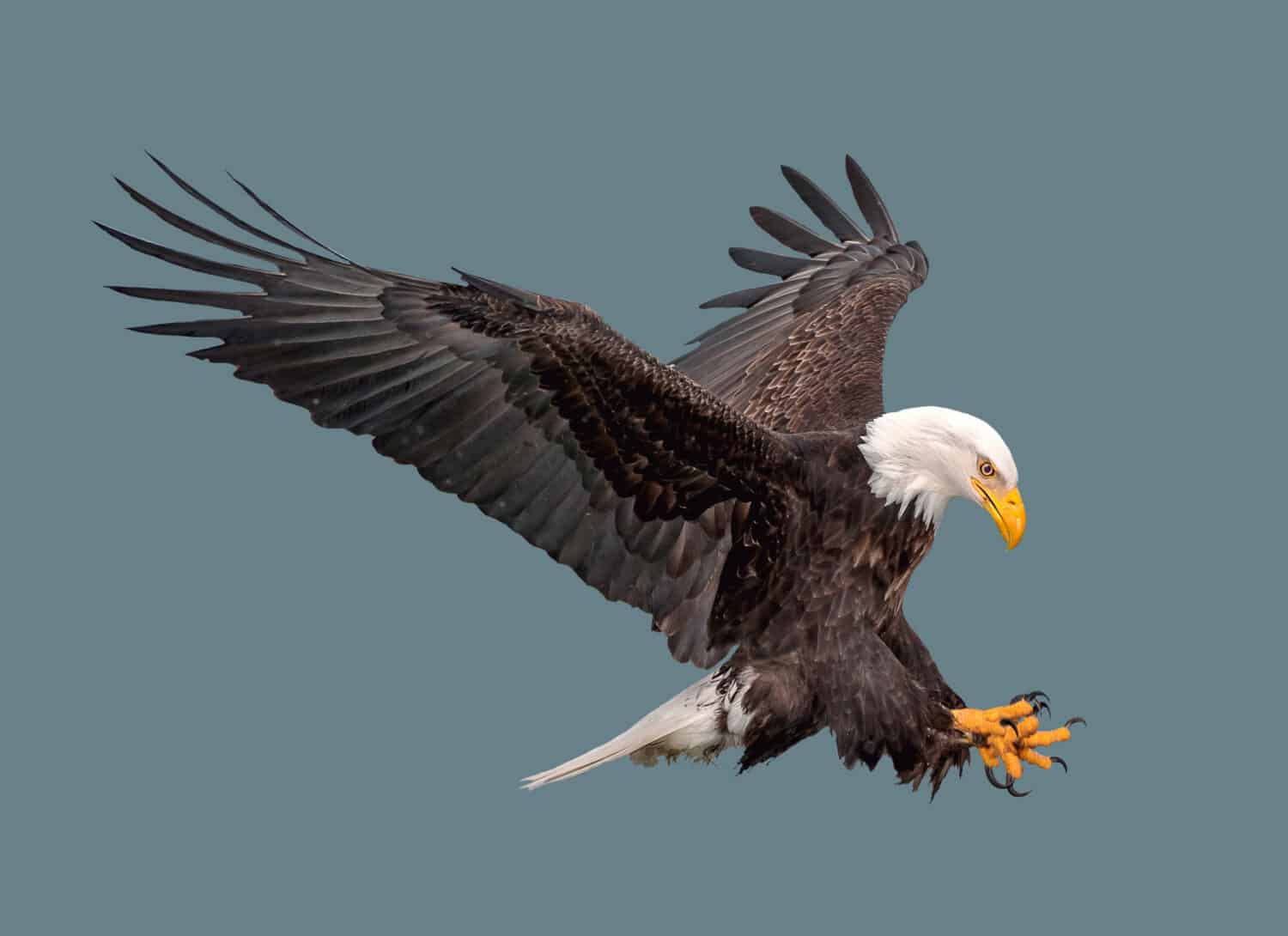
Bald eagle in flight on isolated background© PHOTOOBJECT/Shutterstock.com (© PHOTOOBJECT/Shutterstock.com)
Building a home is hard enough when you’ve got tools, equipment, and a trip to the hardware store whenever you need supplies. Bald eagles don’t have any of those luxuries. They’ve got their beaks, their powerful talons, and whatever materials they can find in the surrounding landscape.
In this footage from Juneau, Alaska, a bald eagle appears to be gathering nesting material in a rather impressive way. Instead of collecting a few loose twigs, the bird gets its talons into a thick clump of vegetation and pulls at the roots and soil beneath it. It’s a good reminder that an eagle’s feet are useful for considerably more than catching dinner.
But why would an eagle need a clump of grass and roots in the first place? The answer has to do with how bald eagles build and maintain some of the largest nests in the bird world.
Watch This Bald Eagle Gather Nesting Material in Alaska
The Instagram footage was shared by Marys Mark, a wildlife photography account featuring animals and landscapes around Alaska. The video was reportedly filmed in Juneau, where bald eagles are a familiar sight along the region’s waterways, forests, and shorelines.
In the clip, the eagle stands on the ground and works its talons into a patch of vegetation. Rather than simply picking up a loose branch, it appears to be pulling at a clump containing roots, grass, and soil.
It’s an impressive demonstration of how effectively these birds can use their feet. Eagles are equipped with four toes on each foot, each ending in a curved claw. Their powerful gripping ability helps them catch and carry prey, but it also allows them to manipulate sticks, vegetation, and other objects.
The footage doesn’t independently establish whether the eagle ultimately carried the material to a nest. However, gathering vegetation is consistent with normal bald eagle nesting behavior, and the material shown would be useful for lining a nest.
Why Would a Bald Eagle Pull Grass and Roots From the Ground?
Unlike many smaller birds that build relatively delicate nests from grass and twigs, bald eagles construct enormous platforms using substantial branches and sticks. These nests, known as aeries, are usually positioned high in mature trees, although eagles sometimes nest on cliffs or other suitable structures.
The larger sticks create the foundation, while smaller vegetation helps fill gaps and make the interior more suitable for eggs and young eaglets. According to the U.S. Fish and Wildlife Service, bald eagles may use grass, moss, seaweed, plant stalks, lichens, and even sod to line their nests.
That last material is particularly interesting in this case. Sod consists of grass and other vegetation held together by roots and soil. Rather than collecting individual blades of grass, an eagle can potentially bring a larger clump of material back to its nest.
Both male and female bald eagles participate in nest construction and maintenance. They may return to the same nest for years, adding fresh material and making repairs along the way. So, what starts as a relatively manageable collection of sticks can eventually become an enormous structure.
How Big Can a Bald Eagle’s Nest Get?
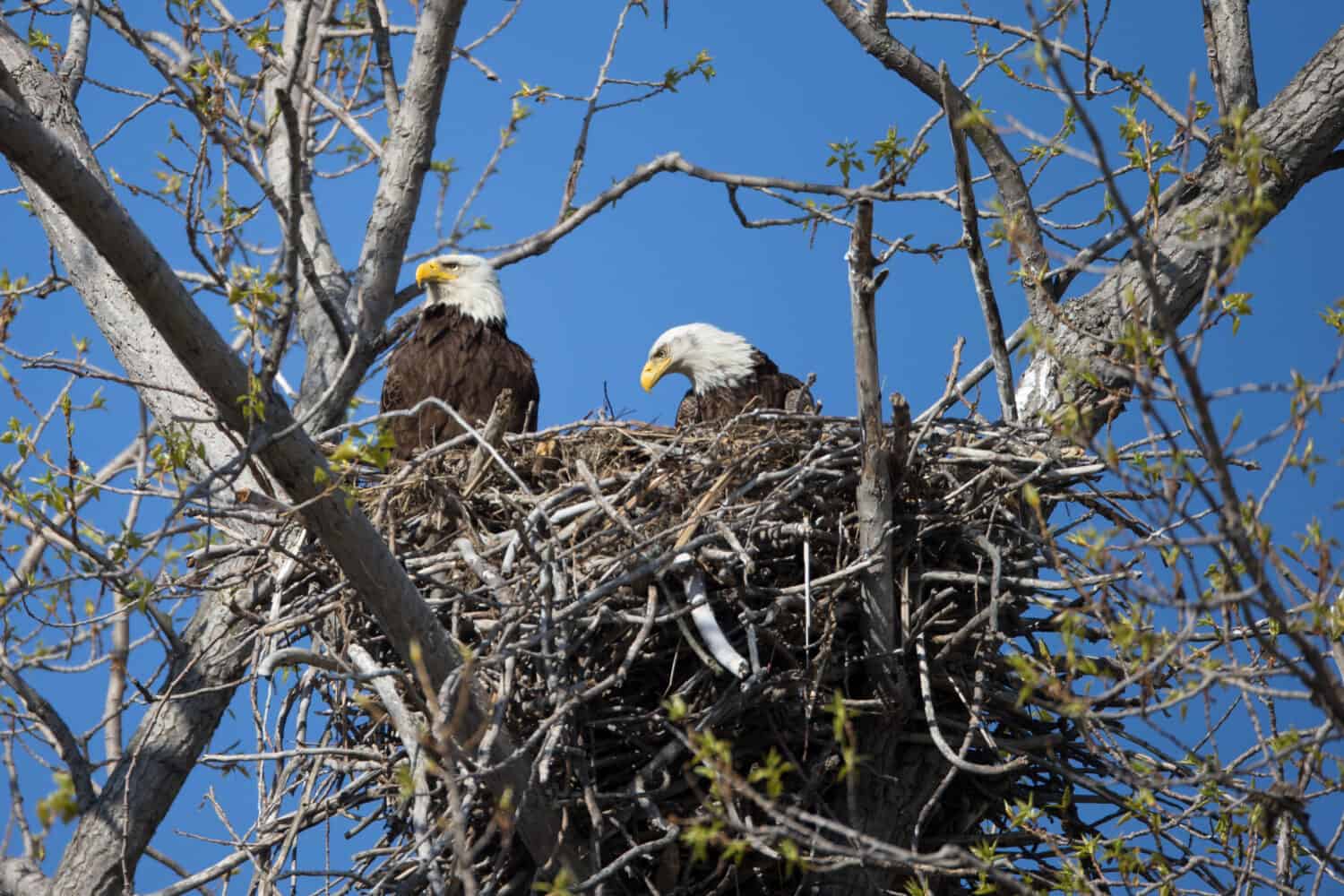
Bald eagles build large nests from interwoven sticks and line them with softer vegetation. Pairs may reuse and expand the same nest over multiple years.©Dennis W Donohue/Shutterstock.com
Let’s just say that bald eagles aren’t particularly interested in downsizing. A typical nest measures approximately four to six feet across and around three feet deep, according to the U.S. Fish and Wildlife Service. That’s already considerably larger than the nests most people are accustomed to seeing in backyard trees.
But the really impressive examples come from nests that have been reused and expanded over many years. As eagles add fresh sticks and vegetation, the structures can grow dramatically in both size and weight. Some become so heavy that they place considerable strain on the trees supporting them.
The Guinness World Records lists a bald eagle nest discovered near St. Petersburg, Florida, as the largest recorded bird’s nest. Examined in 1963, the structure measured approximately 9 feet 6 inches across and 20 feet deep, with an estimated weight exceeding two tons.
That’s not a typo. A pair of birds, each weighing only a fraction of that amount, helped construct a nest heavier than some automobiles. Granted, the massive structure developed over time rather than during a single nesting season, but it’s still an extraordinary accomplishment.
What Makes an Eagle’s Talons So Powerful?
Bald eagles are birds of prey, and their feet are designed primarily for catching, gripping, and carrying food. Each foot has three toes pointing forward and one pointing backward. The curved talons help secure slippery fish and other prey that might otherwise escape.
Those same adaptations are useful when handling nesting materials. An eagle can close its feet around branches or vegetation and use its body weight and leg muscles to pull or lift material. In the video, the bird appears to be using that gripping ability to work loose a patch of roots and grass.
Not all eagle species have identical feet or claws. Harpy eagles, which inhabit tropical forests in Central and South America, are particularly famous for their enormous talons. According to the San Diego Zoo, a harpy eagle’s curved rear talon can reach approximately five inches in length.
That’s considerably different from the bald eagle featured here, but both species demonstrate just how specialized a bird of prey’s feet can be. What looks like a simple act of pulling up grass is actually a good example of anatomy doing exactly what it’s supposed to do.
When Do Bald Eagles Build Their Nests in Alaska?
Timing depends on location. In warmer parts of the United States, bald eagles may begin nesting during the fall or winter. In Alaska, where seasonal conditions are dramatically different, nesting typically takes place during the spring and summer months.
The U.S. Fish and Wildlife Service explains that egg laying generally begins in April across much of Alaska, with courtship and nest-building activity occurring beforehand. Once eggs hatch, the young remain in the nest for weeks before making their first flights, usually at around 10 to 12 weeks of age.
Parents continue caring for their young after those first flights, so a successful nesting season requires a sturdy home that can withstand weather, movement, and the demands of a growing family.
And that’s what makes this relatively simple video worth watching. A bald eagle pulling at a clump of grass might not sound particularly exciting until you realize how much work goes into building and maintaining one of these enormous nests.
Watch the Bald Eagle at Work Below
Take a look at the original footage and pay attention to how the eagle uses its feet to grip and pull at the vegetation. It’s a fascinating look at the physical adaptations that make these birds such capable hunters and, apparently, pretty impressive builders as well.
Source: Nature


0 Comments